• Skip to main content
  • Skip to primary sidebar
  • Skip to footer

English Works

  • Home
  • Our Shop
    • Books
    • Year 12 Frameworks Crafting Texts
    • Argument Analysis
    • Year Level Packages
  • Years 7 – 10
    • Techniques of Persuasion Program
    • Become an Expert Program
      • The English Works Analytical Vocab Builder
    • Better Essays & Persuasive Techniques
    • Grammar & Language (Blue)
    • English Works Classic Short Stories by the masters
  • Years 11-12
    • Oedipus the King by Sophocles: an essay-writing guide
    • Sunset Boulevard : How to Write an A+ Essay
    • Rainbow’s End by Jane Harrison: an essay-writing guide
    • English Works Reader Blue Book
    • Year 11 & 12 Argument Analysis
      • VCE Argument Pack
      • The English Works Analytical Vocab Builder
      • VCE Section C: Suggested Responses
    • Year 12 Frameworks About Country
    • Year 12 Frameworks About Personal Journeys
      • Year 12 Frameworks About Play
      • Year 12 Frameworks About Protest
      • Crafting texts: Year 11 About Crisis
  • Classes
    • Our Classes 2026
  • Contact us

Improve your written analysis/expression by using analytical terms, narrative devices and polished quoting.

April 12, 2020

How to use analytical terms effectively.

One important focus in my Zoom classes (on metalanguage) is on writing sentences (via the chat function). The sentences are based on model sentences from our “Arguments and Persuasive Language: Using metalanguage to advantage”. See sample focus.

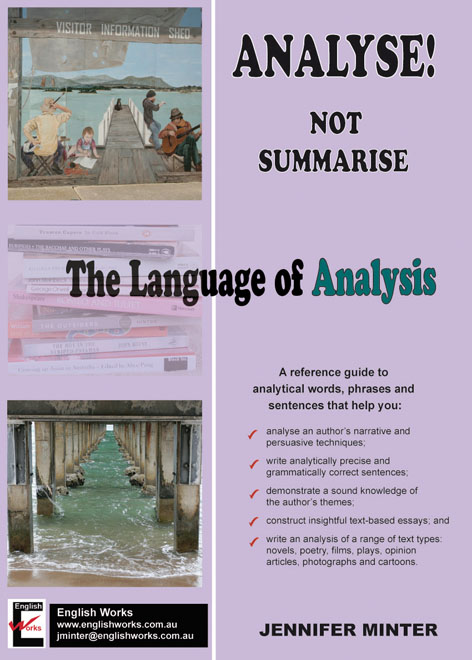
Also based on The Language of Analysis. These classes walk you through: how to embed analytical terms in your analysis/discussion/text response essay; how to quote effectively; how to draw out key points of comparison in a text.

For more information, please see our Zoom class times.

Analytical depth – imagery and figurative and emotive language
Write with me.

Unpack words with double meanings or phrases that are ambiguous (open to several interpretations). For example: (based on a short opinion-text):

  • The fearful (alarming) image of feral children ravaging the restaurant connotes ill-disciplined free-range chicken. The implication is that such children are disturbing the peace of others. The image also serves to reassure those parents who are reluctant to discipline their children through smacking.
  • The idiomatic (clichéd; figurative) reference to “toeing the line” implies that the marketing companies need to adhere to official policies in order to better care for public health needs. In doing so, Ms Carren implores government officials to enforce their solutions. She isolates those who rely on the fast-food companies and, who, she suggests, neglect their public duties.
Tweet

VCE preparation

Jenny

Products

  • Placeholder 2026 Term 2 Zoom Sessions $40.00
  • Placeholder 4 Session Group Lesson $600.00
  • Placeholder Individual Lesson with Dr Jenny via PayPal $135.00
  • 2026 Term 1 Zoom-in lessons (AA and Craft) $160.00 $130.00
  • Rainbow's End by Jane Harrison: an essay-writing guide $28.95

Primary Sidebar

View all Products in this Category

Cart

Search

Footer

For Sponsorship and Other Enquiries

Please contact English Works
Ph: (061) 0400 568 657
or email:jminter@englishworks.com.au
Original artwork by Kelly Bull

Keep in touch

Search

Copyright © 2026 English Works · Log in